
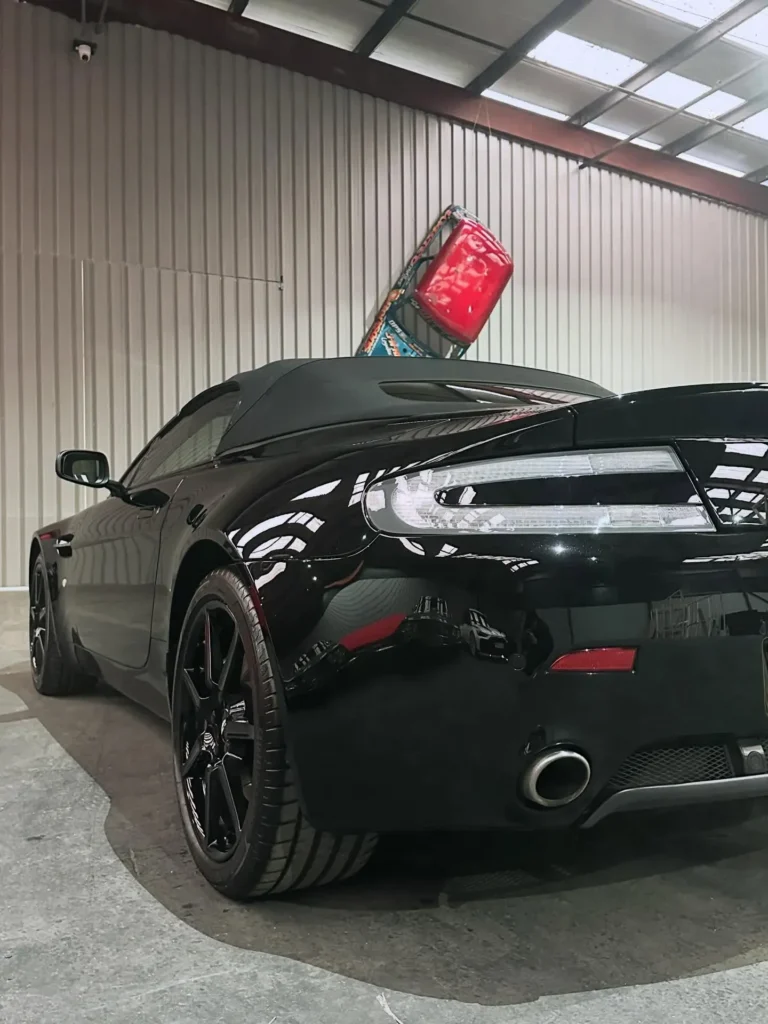
Every supercar storage facility promises flexible access. Almost none say what flexible supercar storage means on a Saturday morning in July when you actually want the car out.
That gap matters more than any other line in the contract. A car you cannot reach is not stored. It is impounded, politely, at your own expense.

The Fear Nobody Names in the Enquiry
Owners ask about security, humidity and price. The worry underneath is simpler: if the weather turns and I want to drive it, how long before I can?
A 911, a McLaren or an Aston is bought to be used. Storage protects the car between those uses. It should not become the reason the car never moves.
Three things decide the real answer, notice period, opening hours, and whether the car is actually ready when you arrive.
Notice Periods, Stated Plainly
Ours is 24 hours’ notice, Monday to Friday, 8am to 4pm. The site is closed at weekends.
That is a real constraint, written here rather than buried. A Saturday collection is arranged on the Friday. In exchange the notice is used: the car is brought out, checked and made ready.
Be wary of instant access with no notice at all. Either the car is parked somewhere very accessible, which usually means somewhere less protected, or nothing is being done to prepare it.
Ready to Drive, or Just Ready to Collect?
This is where facilities separate. A car that has sat for eight weeks needs work before it is fit to drive.
- The battery. Modern supercars draw current constantly. Left alone a battery goes flat in under three weeks and sulphates soon after. A conditioner on the higher tier keeps it maintained.
- Tyre pressures. Raised during storage to resist flat-spotting, then set back before the car goes out. A car handed over on storage pressures does not feel right for ten miles.
- Brake discs. Discs sitting against pads in damp air corrode at the contact point. They are cleaned at intake and the car is moved so one spot is not loaded for months.
- Fluids and levels. Checked on the way in, checked again before it goes out.
The full sequence is on the luxury and supercar storage page. It runs to eight documented steps, the same for every vehicle here.
What the Air Is Doing Around the Car
Temperature is the easy part. Any insulated building holds one. Humidity costs money to control, and humidity is what damages cars.
Air near 55% relative humidity is dry enough that corrosion cannot start and damp enough that leather, seals and timber do not dry out and crack. Both extremes cause harm.
Humidity control sits on the higher tier, stated rather than implied. A facility claiming climate control across the board is usually describing a thermostat. The damage the alternative does is documented in what six months in a damp garage does.
Who Else Is in the Building
A facility mixing supercars with house clearances and business stock manages a different risk to one storing vehicles only. Trolleys and unfamiliar people moving past soft paint is how damage happens.
Ours holds vehicles and nothing else. Access is controlled, the site is monitored by CCTV around the clock and alarmed, and keys are tagged and held separately. Every car is checked visually each day.
What the word secure should actually contain is taken apart in what secure vehicle storage should actually mean.
What Flexible Supercar Storage Looks Like on Paper
| Ask this | A poor answer | What it should sound like |
|---|---|---|
| How much notice to collect? | “Give us a ring” | A stated period, and what is done in it |
| Access hours? | “Flexible” | Actual days and times, weekends included or not |
| Will it start? | “Should do” | Battery maintained on a conditioner throughout |
| Minimum term? | Twelve months | One month, no penalty for leaving |
| Is humidity managed? | “Climate controlled” | A number, and which tier it applies to |
The right-hand column is not a high bar. It is a facility willing to write down what it offers. The longer version is in twelve questions to ask any storage facility.
Short Stays, Long Stays and Getting It There
The minimum stay is one month, with no long tie-in and no penalty for collecting at the end of one.
A summer car goes away in November and returns in April. A car being sold goes in for six weeks. A car whose owner is posted abroad goes in for a year, and is usually declared off the road through the DVLA SORN service while it sits.
Collection runs to 65 miles from Stalybridge by arrangement, which is how most cars arrive. The detail is in covered transport and what 65 miles reaches.
How Pitstop 66 Can Help
The facility is purpose-built, privately owned and enthusiast-run. Bentleys, Ferraris, Porsches, Aston Martins and McLarens sit alongside classic Jaguars and a thirty-year-old Land Rover belonging to one of the team.
Supercar storage tiers and current rates are on the locations and pricing page, and regional coverage is on the supercar storage hub.
To reserve a bay or arrange a look round, enquire here or call 0161 464 7494.
Key Takeaways
- Flexible supercar storage means nothing until a facility states its notice period and access hours.
- A car is only accessible if it is prepared before you arrive, battery, pressures, discs, fluids.
- Humidity near 55% protects paint, leather and seals. Temperature alone does not.
- A vehicles-only building carries less risk than one shared with general storage.
- One month minimum and collection available within 65 miles is what flexible supercar storage looks like in practice.
Also worth reading: why the nearest classic car storage is rarely the right one and why a car should be cleaned before it is stored.
How much notice do I need to collect my car?
24 hours, Monday to Friday between 8am and 4pm. The site is closed at weekends, so a Saturday collection is arranged for the Friday. That notice is used to bring the car out and make it ready to drive.
Will my car start after months in supercar storage?
A battery conditioner is fitted on the higher tier, so the battery is maintained throughout rather than charged at the last minute. Fluids and levels are checked before the car goes out.
Is the storage humidity-controlled?
Humidity control is available on the higher tier, held near 55% relative humidity. That is dry enough to stop corrosion starting and damp enough that leather and seals do not dry out.
What is the minimum storage period?
One month, with no long tie-in and no penalty for collecting the car at the end of a month.
Do you store anything other than vehicles?
No. The building holds vehicles only, with controlled access, 24/7 CCTV and alarm monitoring, and a visual check on every car every day.
