
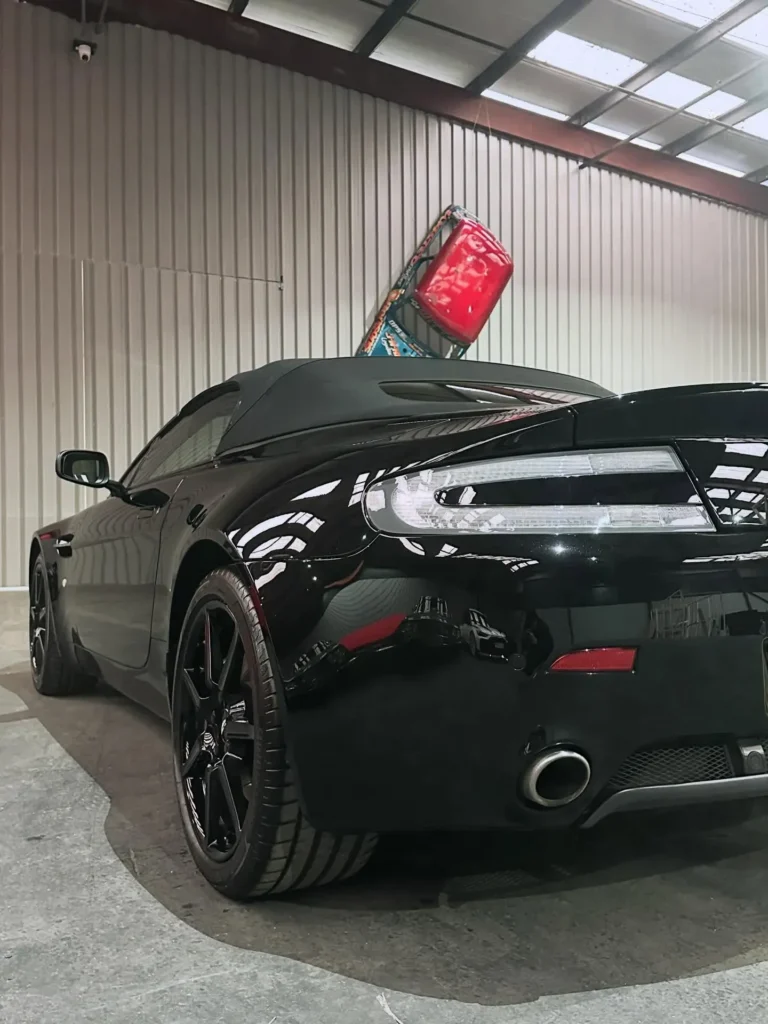
A track car spends more of the year parked than a road car does, and almost nothing written about winter lay-ups applies to it.
Race car storage has its own problems: slicks that take a set, a fuel cell that cannot simply be brimmed, a battery that lives out of the car, and no road-legal way of getting anywhere.
Here is what a track or race car needs between October and March, and what it needs on the way back out.
Why Race Car Storage Is a Different Job
Almost every compromise on a competition car trades longevity for a weekend of performance. Left standing, those compromises are what fail first.
A road car is built to sit in a supermarket car park for a fortnight in the rain. A car built to a regulation book is not built to sit at all.
That shows up in five places: tyres, fuel, battery, brakes and the shell itself.
Tyres Are the Expensive Bit
Slicks and semi-slicks flat-spot far more readily than a road tyre. The construction is stiffer, the sidewall is shorter, and the compound was never designed to sit cold under load for five months.
Worse, a set of competition tyres is already on a clock. Compound hardens with age whether the car turns a wheel or not, and a set stored badly can be finished before it has done a full season.
The right answer is to take the weight off. Stands under the car, or the wheels off entirely and the tyres stored flat, out of sunlight and away from anything producing ozone. What happens to a tyre left loaded is covered in when flat spots roll out and when they do not.

Fuel, Batteries and Fire Sense
A fuel cell with a bladder is happiest with fuel in it, because a dry bladder dries out and cracks. A plain aluminium tank is happiest nearly empty, because condensation forms in the air space above the fuel.
Knowing which you have matters more than any general rule. Race fuel and pump petrol also behave differently over months, and ethanol-blended pump fuel is the one that separates.
Batteries on competition cars are usually small, often lithium, and frequently removed between events. A lithium pack should be stored at partial charge, cool, and not on a lead-acid conditioner, which is the mistake that ruins them.
All of that is a good reason for a storage building to hold vehicles only, with fire safety treated as a legal duty rather than an afterthought.
The Shell, the Brakes and the Suspension
A stripped or part-stripped shell has far more bare metal than a road car, and bare metal is where humidity does its work. Seam sealer is often removed, cage tubes are frequently unpainted inside, and there is no underseal.
Competition brake pads bond to discs faster than road pads, and race discs are expensive enough to matter. Leave the car chocked rather than on the handbrake, and expect a bedding-in session rather than a drive home.
Coilovers left compressed under load for months take a set in the spring, and rose joints seize if they sit damp. Both are cheap problems to avoid and irritating ones to fix at the first test day.
Getting It There and Back
Most track cars have no MOT and no tax, which makes the journey to storage the hardest part of the whole arrangement. An untested vehicle can only be driven to a pre-booked test, as the DVSA sets out, and a car with no road registration cannot be driven at all.
Transport is the only lawful answer, and it is included here within 65 miles of Stalybridge. A low car on a low-angle ramp, strapped by the wheels rather than chained to the chassis, arrives without a mile on it.
Longer moves, imports and multi-car collections run through our vehicle logistics service, and how it works is set out in covered transport and collection.
What It Costs
Secure indoor storage is £150 a month including VAT for the first three months, then £165. The humidity-controlled bay is £200, then £225. Minimum stay is one month.
For a stripped shell or a car with a cage, the humidity-controlled bay is the one that earns its money, because exposed steel has nothing protecting it. Figures sit on the locations and pricing page.
Come Out Ready, Not Just Collected
The first test day of the season is the wrong place to discover what six months did. Race car storage should end with a recommissioning rather than a handover.
Fluids checked and changed where they are due, brakes bled and bedded, corner weights and geometry looked at if the car was stored on stands, and belts and harnesses checked for their expiry dates.
Fire extinguisher service intervals and harness dates both run on a calendar and both catch people out at scrutineering, having quietly expired while the car sat still.
How Pitstop 66 Can Help
We have mechanics and a bodyshop on site, which suits a car that wants setup work, a fluid change or a repair doing while it is already off the road. Doing it in January is cheaper and calmer than doing it in April.
The building is purpose-built, privately occupied, monitored around the clock by CCTV and alarm, with a visual check on every vehicle daily. Detail sits on luxury and supercar storage and professional car storage.
Owners reach us easily from Cheshire and Oldham. To arrange race car storage for the close season, enquire here or call 0161 464 7494.
Also worth reading: what a 911 needs over a winter, when tyre flat spots roll out and when they do not and why brakes seize after a lay-up.
Key Takeaways
- Competition tyres flat-spot faster and age on a calendar. Take the weight off the car.
- A bladder cell wants fuel in it. A plain tank wants to be nearly empty. Know which you have.
- Lithium batteries store at partial charge and must not go on a lead-acid conditioner.
- A stripped shell has far more bare metal, so managed humidity matters more, not less.
- No MOT and no tax means transport is the only lawful way in and out.
Does race car storage need humidity control?
More than a road car does. A stripped or caged shell has bare metal at the seams, inside tubes and under removed sealer, with no underseal protecting it. The humidity-controlled bay is the sensible tier.
Should I leave the car on its wheels?
Preferably not. Stands take the load off competition tyres, which flat-spot far more readily than road tyres. Removing the wheels entirely and storing the tyres flat is better again.
How should I store a lithium race battery?
At partial charge, cool, and out of the car if that is how you normally run it. A lead-acid conditioner is the wrong charger for it and can damage the pack.
Should the fuel tank be full or empty?
It depends on the tank. A bladder cell prefers fuel in it so the bladder does not dry and crack. A plain metal tank prefers to be nearly empty, because condensation forms in the air space.
Can you collect a car with no MOT or tax?
Yes, and that is usually the only lawful way to move it. Collection runs to 65 miles from Stalybridge by arrangement, on a covered transporter where the car warrants it.
Can work be done while the car is stored?
Yes. Mechanics and a bodyshop are on site, and the close season is the cheapest and calmest time to get setup work, fluids or repairs done.
