
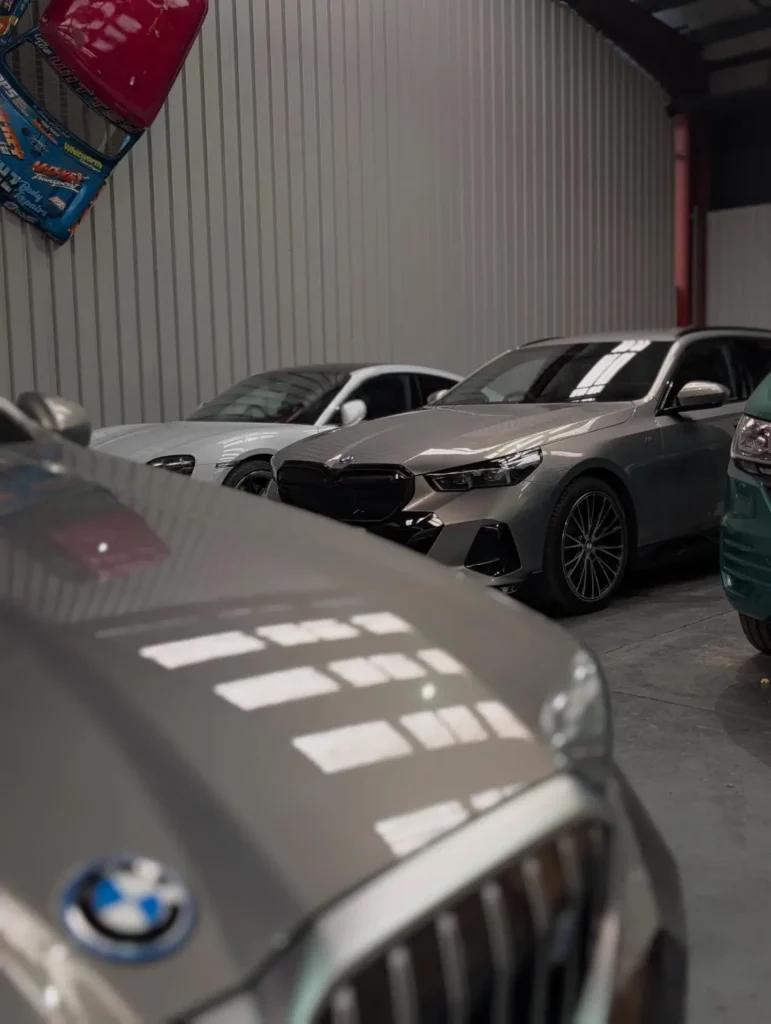
Our car storage packages come in two tiers, and roughly half the enquiries we take are really asking which one they need rather than what they cost.
The honest answer depends on two things: how old the car is, and how long it is standing still. Value comes a distant third.
Here is what sits in both tiers, what the higher one adds, and a straight recommendation by car type.
What Both Car Storage Packages Include
Everything below applies whichever tier you take. None of it is an extra.
- The eight-stage intake: photographed, keys tagged, interior protected, washed, pressures raised, air dried, battery and fluids checked, brake discs cleaned.
- Indoors in a purpose-built building occupied by us alone, with sealed floors.
- 24/7 CCTV and alarm monitoring, with controlled access and a short keyholder list.
- A visual check on every vehicle, every working day, logged against its file.
- Collection and delivery within 65 miles of Stalybridge by arrangement.
- Mechanics and a bodyshop on site, so a fault is dealt with rather than noted.
- A one month minimum stay, with no long tie-in.
What the Higher Tier Adds
One thing, and it is the thing that matters most over a long stay: managed air.
The humidity-controlled area is held at 55% relative humidity and measured rather than assumed. Above 60% steel corrodes. Below 45% leather and rubber can deteriorate and crack. Fifty-five sits between the two.
That is the whole difference, and it is worth about £50 a month. Our piece on why 55% is the number explains the physics behind it.

Which Tier Your Car Actually Needs
A modern car, under three months. Secure indoor storage. Galvanised panels, modern clearcoat and sealed electrics cope easily, and there is nothing the higher tier would protect.
A modern performance car over a winter. Secure indoor storage, with a battery conditioner added. The battery is the only part likely to give trouble.
Any car with chrome brightwork. Humidity-controlled. Chrome pits in damp air and pitting does not polish out at any price.
Leather, timber or an original interior. Humidity-controlled. These are the materials that suffer in air that is too dry as well as air that is too wet.
Anything staying more than a year. Humidity-controlled, without much argument. Over that length the air stops being one factor among several and becomes the main one.
A part-restored car or a bare shell. Humidity-controlled, every time. Exposed steel has no protection at all.
The Add-Ons, and When They Earn Their Place
Two things sit outside both tiers because not every car needs them.
A soft breathable cover is worth it on anything with paint you care about, and worth nothing at all on a car that is going to be washed and sold in March. It has to be breathable and it has to go on dry paint, or it becomes the problem.
A battery conditioner is worth it on anything modern, anything with a security system, and anything staying longer than about eight weeks. It maintains rather than charges, which is a different job from a trickle charger left on a timer.
Detailing, servicing and MOT work are quoted separately again, so a car that needs nothing pays for nothing.
The Numbers
Secure indoor storage is £150 a month including VAT for the first three months, then £165. Humidity-controlled storage is £200, then £225. Both include VAT and both have a one month minimum.
Over a five-month winter that is £810 against £1,050. Over a year, £1,935 against £2,625. Those are the real figures rather than a starting-from headline.
Full detail sits on the locations and pricing page, and the wider market is covered in what car storage costs in the UK. Before the car travels, check its tax and MOT status or let us collect it.
Longer and Larger Arrangements
Multi-car arrangements, open-ended stays and cars that need work while they are here do not fit neatly into two boxes, and we do not pretend they do.
Those get quoted on what the cars actually need. A collection of four with two coming out each summer is a different conversation from one car going away for three years.
Longer stays are covered on the long-term car storage page. The principle stays the same either way: you pay for the bay the car needs, and for the work it actually has done, rather than for a bundle built around an average car that nobody owns.
Three Things Neither Tier Buys
Being clear about the limits is more useful than another list of features.
Neither tier stops a battery reaching the end of its natural life. A conditioner keeps a battery maintained rather than sulphating, but a five-year-old battery going in at five comes out at six.
Neither tier stops tyres ageing. Rubber hardens on a calendar, not a mileage counter, and a set that was already old going in will be older coming out. We record the date codes so nobody is surprised.
Neither tier reverses damage that was already there. A car that arrives with corrosion under a sill arrives with it, and storage holds it where it is rather than undoing it. That is why the arrival photographs matter.
How Pitstop 66 Can Help
We will tell you when the lower tier is enough. Most modern cars going away for a season do not need managed air, and selling one a bay it does not need is a short-term way to run a business.
Service detail sits on the professional car storage page. Owners reach us from Stockport and Bolton, and collection runs to 65 miles.
To have someone look at your car and say which tier it needs, enquire here or call 0161 464 7494.
Also worth reading: why 55% relative humidity is the number, why a stored EV sits at 60% charge, what the cheap end of storage really buys and five storage options compared honestly.
Key Takeaways
- Both car storage packages include the eight-stage intake, daily checks and collection available within 65 miles.
- The higher tier adds one thing: air held at 55% and measured.
- Age and duration decide the tier. Value comes third.
- Chrome, leather, timber, bare steel and any stay over a year point to the higher tier.
- Covers and battery conditioners are add-ons, so a car that needs neither pays for neither.
What do your car storage packages cost?
Secure indoor storage is u0026pound;150 a month including VAT for the first three months, then u0026pound;165. Humidity-controlled storage is u0026pound;200, then u0026pound;225. Minimum stay is one month on both.
What is the difference between the two tiers?
Managed air. The higher tier holds the area at 55% relative humidity and measures it. Everything else, including the intake process and daily checks, is identical.
Are covers and battery conditioners included?
No, they are available as add-ons on either tier. That keeps the price honest for cars that do not need them.
Does my modern car need the humidity-controlled bay?
Usually not for a season. Galvanised panels and sealed electrics cope well. A battery conditioner is generally the more useful addition.
Is there a discount for longer stays?
The rate steps down after the first three months on both tiers, from u0026pound;150 to u0026pound;165 and from u0026pound;200 to u0026pound;225 respectively, and multi-car arrangements are quoted individually.
Can I move between tiers?
Yes, subject to space. Owners often start on secure indoor storage and move up before a second winter.
