

Vehicle transport is one of those services most owners rarely think about until they need it. Then the question arrives quickly: enclosed or open? The difference in cost is meaningful, sometimes substantially so. The difference in protection is also meaningful, sometimes substantially so. And the answer to which one is right depends on the vehicle, the journey, the circumstances, and what the owner is actually trying to protect against.
This guide sets out the practical distinctions between enclosed and open car transport in the UK market, when each is genuinely appropriate, what the cost differences look like in reality, what insurance actually covers during transport, and what to look for in a transport provider. It applies to owners moving a car between properties, delivering a vehicle to auction, collecting a purchase, returning from abroad, arranging pre-sale delivery, or any of the various logistical scenarios where a car needs to travel by trailer rather than under its own power.
For readers arriving here from earlier posts in this content programme — the provenance and resale value guide, the international relocation guide, the true cost of neglecting car storage guide — this post covers the specific transport dimension that supports all of them.
What Enclosed and Open Transport Actually Mean
Before the comparison, understanding what each service actually involves is worth doing clearly.
Open transport describes any arrangement where the vehicle is transported without protection from the surrounding environment. The car sits on a flatbed trailer, or on the deck of a multi-car transporter, or on a low-loader — exposed to weather, road debris, dust, and the view of anyone the journey passes. Open transport is what most people picture when they think of a car being delivered: the low car transporter carrying six or eight vehicles down the motorway, or the single-car flatbed used for shorter local movements.
Open transport dominates the volume market for good reasons. It costs substantially less than enclosed transport. It works fine for the majority of vehicles — daily drivers, dealer stock, auction cars, and the vast majority of used-car sales. Trailers can carry more vehicles simultaneously, driving down the per-car cost. Loading is quicker and simpler. The equipment is more widely available across the UK, so booking flexibility is better.
Enclosed transport describes any arrangement where the vehicle is fully contained within a sealed trailer, container, or truck body. The car is protected from weather, dust, debris, and public view. Enclosed trailers vary from single-car units towed behind a specialist vehicle, to two-car units used by prestige delivery operators, to multi-car enclosed transporters used at the highest end of the market for supercar and classic collections.
Within each category, subcategories exist. Some open transporters use hydraulic lifts appropriate for low-ground-clearance vehicles. Some enclosed transporters have air suspension for delicate cars. Some operators specialise in specific vehicle types (motorcycles, classics, race cars). Some cover the whole UK; others operate within specific regions.
The choice between the two is not simply about status or cost. Different transport methods introduce different risks and address different priorities, and the right choice depends on what the specific journey and vehicle actually need.
When Open Transport Is Genuinely Appropriate
Open transport works well for a wide range of vehicles and scenarios. Understanding when it is genuinely the right choice — rather than the wrong choice made for cost reasons — avoids over-specifying enclosed transport for journeys that do not require it.
Open transport is typically appropriate for:
- Daily drivers moving between owners — a five-year-old family saloon being delivered from a private seller to a private buyer
- Modern used cars from dealer stock — the vast majority of dealer-to-customer deliveries use open transport
- Auction lot movement — cars going to or from auction where the value does not justify enclosed premium
- Short local deliveries — journeys under 50 miles where weather exposure is limited and journey duration is short
- Cars being transported to be scrapped or dismantled — condition on arrival does not matter significantly
- Cars in poor cosmetic condition already — additional weather exposure has limited marginal cost
- Multi-car dealer-to-dealer trade movements — cost efficiency matters and vehicles are typically well-suited to open carriage
- Cars going to a bodyshop or workshop — additional dust or debris exposure has no meaningful impact on cars about to be worked on
For these scenarios, the cost saving of open transport typically outweighs the additional protection of enclosed transport, and the vehicles being moved are not particularly vulnerable to the specific risks that enclosed transport addresses.
The decision to use open transport for these categories is not a compromise. It is the correct choice.
When Enclosed Transport Genuinely Matters
Enclosed transport addresses specific risks that open transport does not. For vehicles vulnerable to those risks, or where the value of the vehicle makes the marginal risk material, enclosed transport is the correct choice rather than a luxury.
Enclosed transport is genuinely important for:
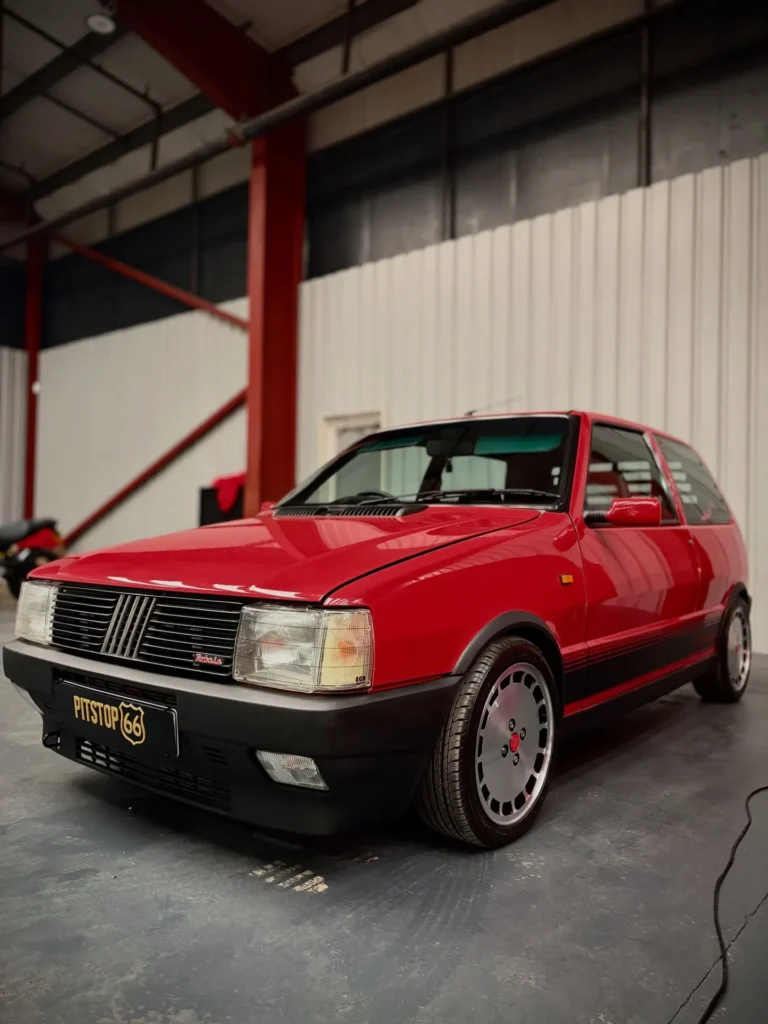
- Classic cars — original paintwork, chrome, and interior materials are less tolerant of weather exposure, road debris, or dust than modern equivalents. Even a short open-transport journey can cause damage to a delicate classic that would take significant work to reverse.
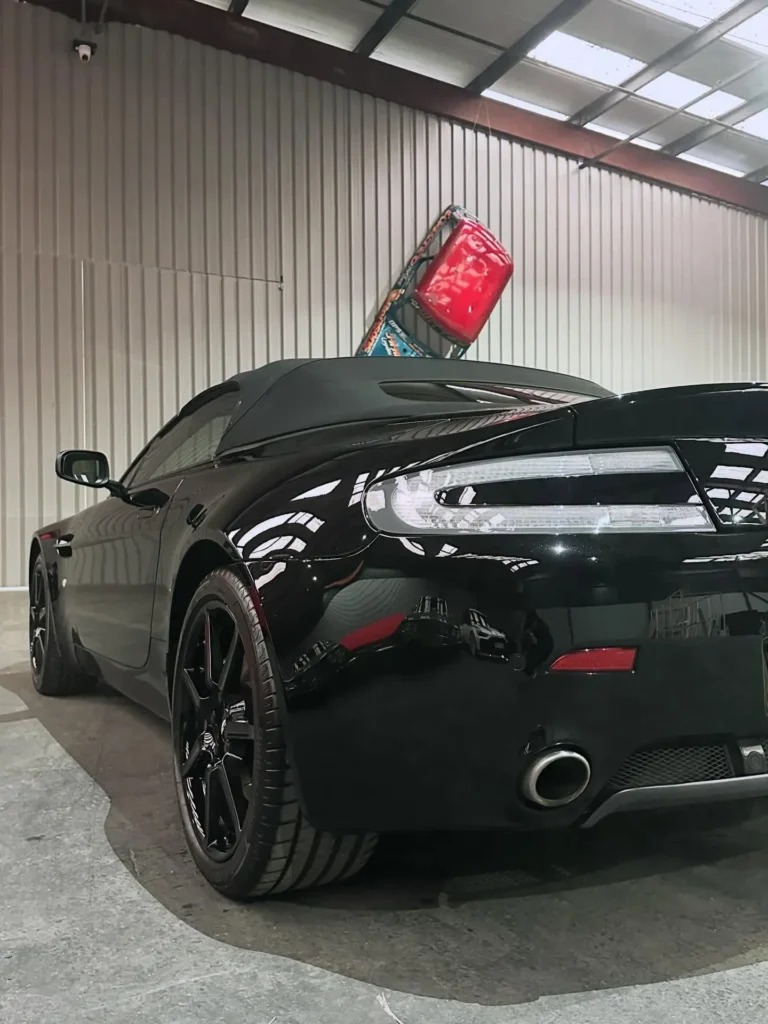
- Supercars and prestige vehicles — the paint finishes on high-end modern vehicles are frequently more delicate than owners realise. Multi-stage paint, ceramic coatings, and satin finishes can all be damaged by road debris impact or weather exposure during transport.
- Cars with low ground clearance — some enclosed trailers use hydraulic lifts or ramps that suit low-clearance vehicles significantly better than open transporters, which typically use fixed ramps.
- Cars being delivered to a sale, auction, or viewing — arriving in optimal cosmetic condition affects the buyer’s or the auction house’s perception and can materially affect price. The classic car provenance and resale value guide discusses how condition on delivery affects sale outcomes for classics.
- Cars being delivered from long-term storage — a car that has been thoroughly cared for through months of specialist storage deserves to arrive with that care intact. Open transport for the final leg can undo the storage investment.
- Cars vulnerable to theft or targeted attention — enclosed transport is invisible from outside. A supercar or valuable classic on a low-loader with public visibility is a target; the same car inside an enclosed trailer is not.
- Cars with soft tops or vulnerable exterior features — convertibles, cars with delicate spoilers, cars with exposed brake discs or bare metal — all benefit from enclosed protection.
- Long-distance journeys — the cumulative exposure to weather and road debris over a long journey means enclosed transport becomes more valuable as distance increases.
- Delivery in poor weather — winter delivery, journey through rain, snow, or salt-treated roads all justify enclosed transport for cars that otherwise might tolerate open.
- Cars where the owner cares particularly about presentation — some owners simply want their car to arrive in exactly the condition it left. Enclosed transport delivers that outcome reliably.
For these scenarios, the additional cost of enclosed transport is not a premium for status. It is a specific service addressing specific risks that open transport cannot address.
The Cost Difference in the UK Market
Vehicle transport in the UK is priced primarily by distance, with variables for vehicle size, urgency, load type, and specific requirements. Broadly:
Open transport pricing (as of 2026):
- Short distance (under 100 miles): £1.50 to £4 per mile is common, with fixed minimum charges (often £150-£250) for very short jobs
- Medium distance (100-300 miles): £1 to £2.50 per mile is typical
- Long distance (300+ miles): rates drop toward £0.75-£1.50 per mile, particularly for full-load transporters
- Multi-car open transporters (six to eight vehicles at a time) offer the lowest per-car rates, particularly on established routes
Enclosed transport pricing (as of 2026):
- Short distance (under 100 miles): £3 to £6 per mile is common
- Medium distance (100-300 miles): £2.50 to £5 per mile typical
- Long distance (300+ miles): £2 to £4 per mile typical
- Specialist enclosed operators for supercars and classics can price higher, particularly for dedicated single-car service
Broad rule of thumb: enclosed transport typically costs two to three times open transport for the equivalent journey, though the multiplier varies with distance, urgency, and specific requirements. For a 200-mile journey, an open transport quote might be around £250-£400 while an enclosed quote might be £600-£1,000. For a 50-mile local delivery, both prices scale down but the enclosed premium (in percentage terms) tends to be larger because the fixed costs of an enclosed operation are higher.
Additional factors that affect pricing:
- Load type — full-load transport (one dedicated trailer for one car or one collection) costs more than shared-load
- Urgency — next-day or same-day service premiums typically add 25-50%
- Vehicle characteristics — very low ground clearance, non-running vehicles, or specialist requirements add cost
- Weekend or evening delivery — often 15-30% premium over weekday business hours
- Distance from operator’s base — cars requiring the transport operator to travel a long way to collection add cost
- Loading equipment required — hydraulic lifts, cranes for non-runners, specialist trailers all add cost
For owners considering the enclosed premium, the practical comparison is not enclosed cost versus open cost — it is enclosed cost versus the potential cost of open-transport damage on the specific vehicle. For a modern family saloon, the potential damage from open transport is small; the enclosed premium is not justified. For a classic with original paintwork worth £50,000, the potential damage from a stone chip on a motorway journey easily exceeds the enclosed transport premium; the calculation flips.
Insurance During Vehicle Transport
Insurance during transport is one of the most commonly-overlooked aspects of arranging vehicle transport, and worth understanding before a car is loaded onto any trailer.
The general principles:
- The transport operator’s insurance covers the vehicle during transport. Reputable operators carry goods-in-transit insurance specifically for the vehicles they carry.
- The owner’s own motor insurance typically does not cover the vehicle during transport — it is not being driven, and most motor policies exclude cars being transported by third parties.
- The transport operator’s cover has specific limits — typically expressed as a maximum value per vehicle carried. £100,000 per vehicle is common at the lower end; £500,000 or higher for specialist enclosed operators.
- Damage claims are made against the transport operator’s insurance in the event of loss or damage during transport.
- What is covered varies by operator — some cover only in-transit accidents; others cover loading and unloading damage; others include comprehensive risk transfer.
Practical steps worth taking before arranging transport:
- Confirm the operator’s insurance level in writing — get the specific policy limits and coverage scope confirmed by the operator before booking, not verbally, not from marketing materials
- Match cover to vehicle value — if the operator’s maximum per-vehicle cover is £100,000 and the car being transported is worth £150,000, the arrangement is inadequate and additional cover or a different operator is needed
- Confirm coverage scope — accident, theft, weather damage, loading damage, and any specific exclusions
- Photograph the vehicle before and after transport — comprehensive photographic record from every angle, with a timestamp, provides evidence in any dispute
- Complete the transport paperwork carefully — the driver’s condition report on collection should be examined and any pre-existing marks noted rather than ignored
For high-value vehicles, some owners choose to arrange additional insurance through their own specialist insurer — this is particularly common with classic car insurance where specialists (Hagerty, Adrian Flux, Footman James, Peter James, Lancaster Insurance) often have specific arrangements for cars in transit. The car storage insurance UK guide covers the broader UK insurance framework that applies alongside transport arrangements.
What to Look for in a Transport Provider
Not all transport operators are equal, and the differences matter more with valuable vehicles than owners frequently realise. Practical criteria worth applying:
Regulatory basics:
- Operator’s Licence — commercial vehicle transport in the UK requires a specific Operator’s Licence issued by the Traffic Commissioner. Legitimate operators are licensed; unlicensed operators are not just cheaper — they are outside the regulatory framework entirely.
- Public liability insurance — separate from goods-in-transit cover but equally important
- Employer’s liability insurance — for operators with employed drivers
- Registered UK business — with a genuine business address and company registration
Practical quality:
- Fleet condition — trailers well-maintained, appropriate for the vehicles being carried, with proper loading equipment
- Driver experience — specialist car transport is a distinct skill from general haulage; look for operators whose drivers specifically handle valuable vehicles
- Loading equipment — hydraulic lifts, low-loading trailers, or ramps appropriate for the specific vehicle
- Track record — length of time operating, verifiable customer references, presence in relevant industry associations
- Communication — responsive booking, clear timing, tracking of vehicles in transit, notification on arrival
Service specifics:
- Insurance coverage limits — confirmed in writing, matched to vehicle value
- Documentation practice — proper condition reports on collection and delivery
- Flexibility on collection and delivery — timing that suits the owner, not just the operator
- Delivery to specific locations — auction houses, storage facilities, private addresses all handled properly
- Handling of unusual requirements — non-runners, cars needing recovery, cars with specific storage instructions
Warning signs to avoid:
- Cash-only pricing or reluctance to provide invoices
- Vague insurance claims (“we’re “) without specific limits
- No fixed business address or only mobile phone contact
- Very low prices significantly below the market range — often indicates unlicensed operation or inadequate insurance
- Poor reviews with common themes — vehicle damage, delays, communication problems
- Reluctance to complete condition reports — either at collection or delivery
For vehicles of any real value, the cheapest transport option is rarely the right one. The savings on transport cost are trivial compared to the potential damage from an operator who cuts corners on maintenance, insurance, or handling standards.
Practical Scenarios and the Right Choice for Each
The right transport choice varies by scenario. The following covers common situations:
Scenario 1: Modern used car being sold to a private buyer
- Vehicle: 5-year-old family saloon, £15,000 value
- Journey: 200 miles
- Correct choice: Open transport. The vehicle is well-suited to open carriage, damage risks are modest, cost savings are significant.
Scenario 2: Classic being delivered from long-term storage to owner’s home
- Vehicle: 1970s classic sports car, £45,000 value
- Journey: 150 miles from specialist storage
- Correct choice: Enclosed transport. The original paintwork and chrome would be at unnecessary risk during open transport; the storage investment deserves protection through the final leg.
Scenario 3: Modern prestige vehicle being delivered to a Manchester Airport hotel for owner return from overseas trip
- Vehicle: modern Range Rover or Mercedes S-Class, £80,000 value
- Journey: 15 miles from specialist storage
- Correct choice: Enclosed transport for the vehicle value, but a short journey. The cost difference is modest; the protection is worthwhile. The Heald Green car storage page discusses this scenario specifically for owners returning through Manchester Airport.
Scenario 4: Classic being delivered to a UK auction house
- Vehicle: 1980s classic sports car, £30,000 estimate
- Journey: 250 miles
- Correct choice: Enclosed transport. Arriving in optimal condition affects auction outcome; discretion during transport is worth having; the transport premium is small relative to the sale value.
Scenario 5: Supercar being collected from a dealer
- Vehicle: modern supercar, £200,000+ value
- Journey: any distance
- Correct choice: Enclosed transport with specialist operator. Standard enclosed transport works; specialist supercar delivery operators offer higher insurance limits, dedicated single-car service, and equipment specifically for low-ground-clearance vehicles.
Scenario 6: Multi-car collection being moved to specialist storage
- Vehicles: multiple classics and prestige vehicles
- Journey: 100 miles
- Correct choice: Enclosed transport, dedicated load. Costs more than shared-load, but the collection deserves consistent handling and the practical logistics of multiple vehicles are simpler on a dedicated arrangement.
Scenario 7: Restoration project being transported
- Vehicle: non-running classic in poor cosmetic condition
- Journey: 200 miles
- Correct choice: Open transport with recovery equipment. The vehicle needs to be recovered rather than driven onto the trailer; cosmetic protection is not a priority because the car is destined for full restoration.
Scenario 8: Pre-sale delivery of a classic being sent to a photographer or magazine feature
- Vehicle: prestige classic being professionally photographed
- Journey: any distance
- Correct choice: Enclosed transport. The car needs to arrive in optimal condition for photography, and the presentation depends on it.
The pattern across these scenarios is the same. The choice comes down to matching the transport method to the vehicle’s specific needs and the journey’s specific circumstances, not to applying a universal rule.
How Pitstop 66’s Vehicle Logistics Service Works
The vehicle logistics service at Pitstop 66 is calibrated for the range of scenarios covered throughout this content programme — collection before storage, delivery after storage, pre-sale delivery to auction, return delivery for owners coming back from abroad, and general specialist transport for owners in the wider Greater Manchester area.
Key elements of the service:
- Enclosed transport as standard for high-value vehicles — classics, supercars, prestige saloons, and any vehicle where enclosed protection is genuinely appropriate
- Open transport available where appropriate — for daily-driver movements, restoration projects being recovered, or scenarios where open is genuinely the right choice
- Enclosed throughout — cover appropriate to the vehicle value, with specific policy details confirmed in writing before transport
- Collection from any UK address — private addresses, dealers, auction houses, other storage facilities
- Delivery to any UK address — the same range, plus airport delivery for owners returning from overseas
- Coordination with storage arrangements — the transport service integrates with the storage arrangement rather than being a separate procurement
- Condition documentation — photographic and written condition reports at both collection and delivery, providing the same standard of documentation the daily check practice applies during storage
- Communication throughout — booking, timing, tracking, arrival confirmation all handled properly
- Flexibility on requirements — non-runners, urgent delivery, weekend arrangements, and other specific needs accommodated where possible
The service is particularly useful for the specific scenarios earlier posts have discussed:
- Pre-storage collection for owners going abroad — as discussed in the car storage while abroad guide
- Pre-sale delivery to auction houses — as discussed in the classic car provenance and resale value guide
- Airport delivery for owners returning through Manchester Airport — as discussed on the Heald Green car storage page
- Long-distance collection for owners further afield who prefer not to drive their vehicle in — as discussed on the Standish car storage page and other longer-distance location pages
The wider service picture is set out on our vehicle logistics page, and the specific care standards for different vehicle types are on our classic car storage page and luxury and supercar storage page. The overall approach to vehicle care — of which transport is one element — is on our why choose us page.
For owners who have arranged pre-sale detailing at the facility, the transport service can deliver directly from detailing to the sale destination. Our valeting and detailing service works alongside logistics as a combined offering.
Frequently Asked Questions
What is the difference between enclosed and open car transport?
Open transport means the vehicle is carried on a trailer or transporter without protection from the surrounding environment — exposed to weather, road debris, dust, and public view. Enclosed transport means the vehicle is fully contained within a sealed trailer or truck body, protected from all of these. Open transport costs substantially less and works well for daily drivers, auction cars, and standard used vehicles. Enclosed transport is more expensive and is genuinely important for classics, supercars, cars with delicate paintwork, and any vehicle where the additional protection is worth the additional cost.
How much more does enclosed transport cost than open transport in the UK?
Enclosed transport typically costs two to three times the equivalent open transport, though the multiplier varies with distance, urgency, and specific requirements. For a 200-mile journey in 2026, an open transport quote might be £250-£400 while enclosed transport for the same journey might be £600-£1,000. Additional costs apply for full-load dedicated service, weekend delivery, urgent timing, or specialist requirements like hydraulic lifts for low-ground-clearance vehicles.
When should I use enclosed transport for my car?
Enclosed transport is genuinely important for classics with original paintwork, supercars and prestige vehicles with delicate finishes, cars being delivered to a sale or auction, cars being delivered from long-term specialist storage, cars vulnerable to theft or targeted attention, cars with low ground clearance, long-distance journeys, delivery in poor weather, and any situation where the vehicle needs to arrive in optimal condition. For daily drivers, dealer stock, and standard used vehicles, open transport is usually the correct choice.
Is my car insured during transport?
The transport operator’s goods-in-transit insurance covers the vehicle during transport — the owner’s own motor insurance typically does not apply to a vehicle being transported by a third party. Reputable operators carry insurance with specific per-vehicle limits (£100,000 is common at the entry level; £500,000 or higher for specialist enclosed operators). Confirm the operator’s coverage limits in writing before booking, particularly for high-value vehicles. Additional insurance through classic car specialists may be worth arranging for particularly valuable cars.
