
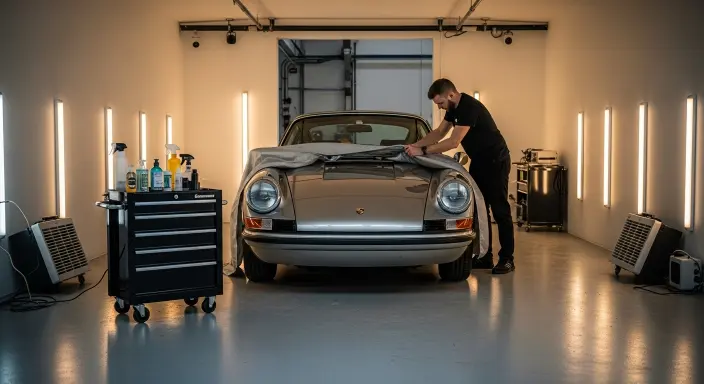
As another winter approaches in Manchester and the North West, many classic car owners choose to tuck their car away until the weather improves. But preparing your vehicle properly for winter car storage isn’t just about keeping it off the road – it’s about protecting its value, reliability, and condition for years to come.
At Pitstop 66, we understand the care and attention that classic cars deserve. Whether you’re storing your vehicle at home or in a professional, humidity-monitored classic car storage facility like ours, these steps will help keep it in perfect condition throughout the colder months.
1. Give It a Thorough Clean and Dry
Before storing your car, always start with a full clean – inside, outside, and underneath. Any dirt, salt, or road residue left on the bodywork or chassis can cause corrosion over time.
Use a high-quality shampoo and wax to protect the paintwork, and make sure the car is completely dry before putting it away. If you’re storing the car indoors, a breathable car cover will prevent dust build-up without trapping moisture.
At Pitstop 66, each car is prepared for storage with care, with cleaning and cover fitting included or available depending on your chosen package.
2. Check Fluids and Battery Health
Fluids can degrade or attract moisture when left sitting for long periods. Top up or replace the coolant, brake fluid, and engine oil to prevent internal corrosion and keep seals lubricated.
Your battery also needs attention. If left unattended, it will discharge and could become damaged. Using a smart trickle charger will maintain it safely throughout winter – included as standard with most of our car storage packages at Pitstop 66, and available as an optional service with others.
3. Protect the Tyres and Suspension
When a car sits stationary for months, tyres can develop flat spots. Inflate them to the manufacturer’s recommended storage pressure or slightly above, and if possible, move the car occasionally to distribute weight.
At Pitstop 66, we carry out regular tyre rolls and pressure checks as part of our dedicated Maintenance & Care services – ensuring every vehicle stays in top condition even during extended long-term car storage.
4. Run the Engine – Carefully
If you’re storing your car at home, it’s tempting to start it occasionally to “keep things moving.” However, running the engine briefly without reaching full operating temperature can actually cause condensation inside the exhaust and engine.
If you do start it, make sure it runs long enough to reach temperature and burn off any moisture. Our secure indoor and dehumidified indoor storage packages include controlled, temperature-managed engine run-ups to keep mechanical components in good health during storage.
5. Choose a Controlled Environment
Cold, damp garages are the biggest threat to a classic car in winter. Moisture in the air causes metal parts to oxidise, chrome to dull, and leather interiors to absorb humidity.
A dehumidified, temperature-stable storage environment ensures your car is protected from these risks. At Pitstop 66, our facility in Stalybridge monitors humidity at 55% RH all year round – preventing the kind of gradual deterioration that’s easy to miss until spring.
6. Review Insurance and Security
Before parking your car for winter, check your insurance policy. Some insurers offer reduced rates for off-road or secure vehicle storage, while others may require proof of monitored protection.
If you’re storing with us, our secure car storage facility provides 24/7 CCTV monitoring, alarms, and fire protection – giving you one less thing to think about. You can also access your car with as little as 24 hours’ notice, depending on your package level.
7. Keep the Interior Fresh
Moisture and trapped air can lead to musty odours or mould inside your car. Use dehumidifier bags or silica-gel packs in the cabin and boot to absorb excess moisture. A light leather treatment or conditioner can help protect classic interiors over the winter months.
Our detailing team at Pitstop 66 can take care of this for you, using premium products in our dedicated bay – discover more about our Detailing & Presentation services.
Enjoy reassurance All Winter Long
Winter storage isn’t just about keeping your car safe – it’s about preserving its condition, performance, and long-term value. Taking a few simple precautions now can save you time, money, and effort when spring returns.
At Pitstop 66, we handle every part of this process for you. From preparation and detailing to maintenance checks and dehumidified car storage, we ensure your classic remains in exceptional condition.
Whether you’re based in Manchester, Cheshire, or anywhere across the North West, our secure indoor storage facility, humidity monitored at 55% RH, offers the perfect winter home for your car.
Speak to our team today about classic car storage in Manchester and discover how we can help you protect your car all winter long.
A four-week countdown
Preparation done properly starts before the last drive, not on the day the car goes away.
Four weeks out: book any outstanding work. A car going into storage with a known oil leak, a soft brake pedal or a coolant weep will come out with the same fault and several months of consequences attached to it.
Two weeks out: change the oil and filter if it is anywhere near due. Used oil carries acidic combustion by-products, and leaving those sitting against bearing surfaces for six months is the single most avoidable piece of internal damage in storage.
One week out: fill the tank to around 90%. A full tank leaves little air space for condensation to form in, and adding a fuel stabiliser is worthwhile for anything staying beyond three months.
The last drive: take it far enough to get everything properly hot, twenty miles or more. That drives moisture out of the oil and the exhaust system rather than leaving it to sit.
The wash matters more than people think
Traffic film, road salt, brake dust, tree sap and bird lime are all mildly corrosive and all keep working for as long as they are left on the paint. Six months under a cover with salt still in the sills does measurable damage that a wash in March will not undo.
Wash thoroughly, pay attention to the underside and the wheel arches, and then let the car dry completely before it is covered. This is the step most often skipped and the one that causes the most avoidable harm, a breathable cover over a damp panel traps the moisture against the paint instead of letting it escape.
What to do about the battery, brakes and tyres
- Battery: an automatic conditioner is better than disconnecting, and far better than nothing. Disconnecting loses radio codes and, on later cars, module settings
- Handbrake: leave it off. Chock the wheels instead. A handbrake left on through a damp winter can bond the pads or shoes to the drum or disc
- Tyres: raise pressures well above road pressure to spread the load, and note the correct figures somewhere so they get set back in spring
- Wipers: lift them off the screen, or the rubber takes a set and smears all summer
- Ventilation: leave a window very slightly open if the environment is genuinely dry. In a damp garage, do the opposite
Where the car goes matters more than any of it
Every step above is undone by six months in the wrong environment. Above 60% relative humidity the metal corrodes regardless of how well you washed it; below 45% the leather dries however good the conditioner was.
If the car is staying at home, an unheated garage with good airflow is usually better than a heated one with none. If it is coming to us, the eight-stage intake covers most of the list above and the hall sits at 55% relative humidity, monitored rather than assumed. Winter storage starts at £150 a month including VAT, and we collect within 65 miles by arrangement.

Pingback: Indoor vs Outdoor Car Storage: Which Is Better?