
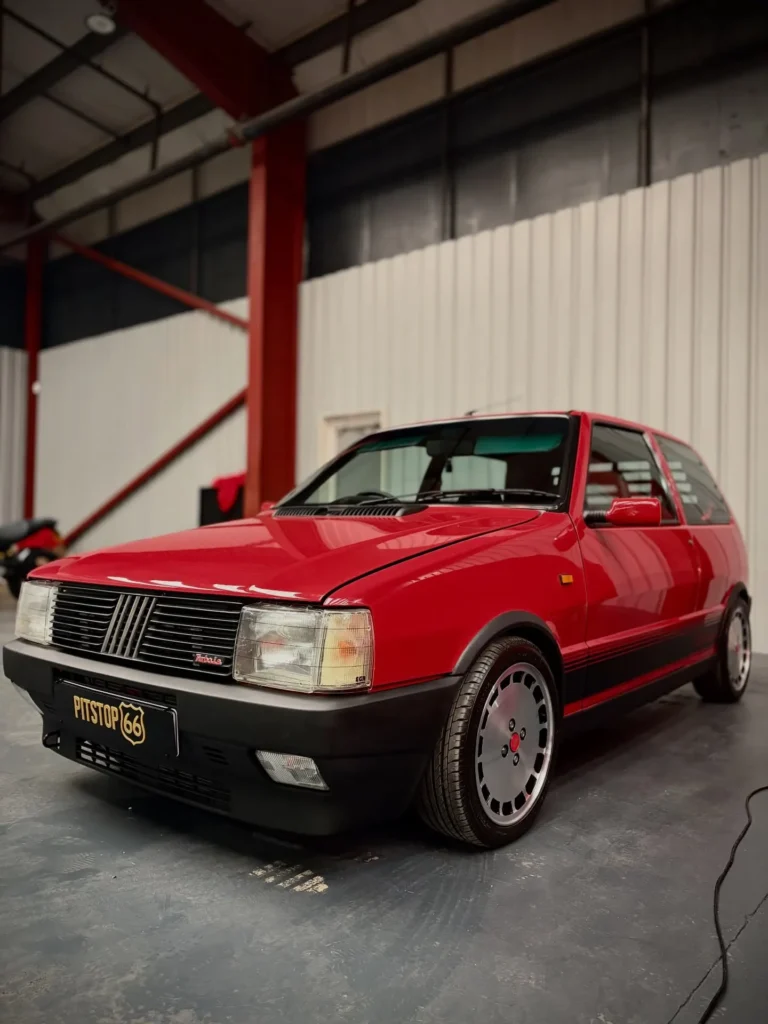
If you own a classic, luxury or rarely-driven second car in Congleton, you’ve probably already noticed the problem: there are plenty of storage options around CW12, but very few that are actually built for cars.
Search “car storage Congleton” and you’ll find self-storage facilities on Havannah Street, container yards on the edge of town, and a handful of farm sheds offering “covered parking.” On paper, they all look like they’d do the job. In practice, the wrong choice can quietly cost you thousands, in flat-spotted tyres, perished seals, mould inside leather, or a battery that won’t take a charge in spring.
This guide is for Congleton owners who want their car looked after properly. We’ll explain the real difference between self-storage and specialist car storage, what your vehicle actually needs while it’s off the road, and how to decide which option is right for you.
The Two Options Congleton Owners Actually Have
Most people researching “car storage in Congleton” end up choosing between two very different things. They’re often presented as similar, but they aren’t.
Option 1: Self-Storage Containers and Drive-In Units
Local providers like Apex Self Storage on Havannah Street, Contain-A-Lot, and Gawsworth Storage near Macclesfield all offer drive-in containers or warehouse bays where you can park a vehicle. They’re competitive on price and convenient on access.
What they typically include:
- A locked steel container or partitioned bay
- CCTV around the perimeter
- Self-access during set hours
What they typically don’t include:
- Humidity or temperature control
- Daily checks on the vehicle
- A breathable car cover
- Battery conditioning
- Tyre pressure management
- On-site mechanics if something needs attention
Self-storage is designed to keep boxes and stock dry and secure. It’s not designed to keep a vehicle in driving condition.
Option 2: Specialist Car Storage Facilities
A specialist facility is built around the vehicle, not the unit. The building is dehumidified, the vehicles are individually monitored, and someone with mechanical knowledge is checking each car regularly.
For owners in Congleton, the nearest specialist facilities sit just outside the town, including Pitstop 66’s secure indoor facility in Stalybridge, less than 45 minutes up the A523/M60 corridor (and we offer collection if you’d rather not drive it yourself). Other specialists serving the area include facilities in Sandbach, Macclesfield and the Cheshire/Shropshire border.
The cost is higher than a self-storage unit. The protection is in a different league.
What a Car Actually Needs When It’s Not Being Driven
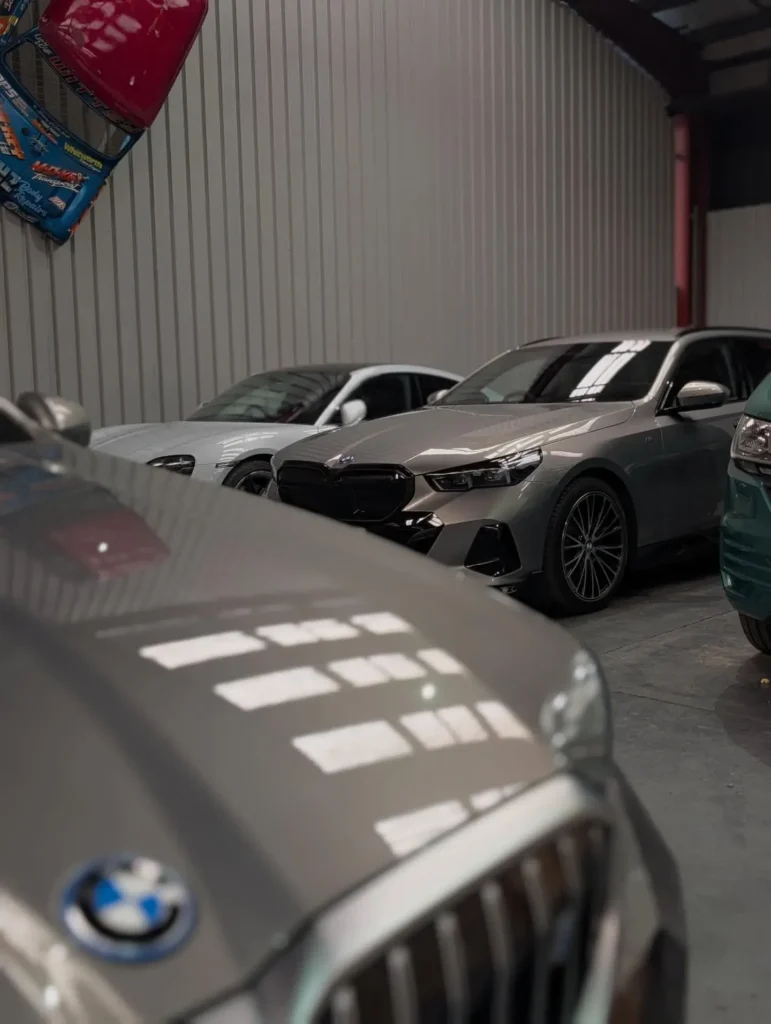
The reason this distinction matters is that vehicles don’t behave like furniture in storage. A car left untouched for three to six months goes through a quiet, predictable list of problems, and almost all of them can be prevented.
Humidity Damage
Cheshire winters are damp. Congleton sits in a valley between the Pennines and the Cheshire Plain, and overnight humidity inside an unheated container regularly climbs above 70%. At that level, condensation forms on cold metal, bodywork, brake discs, exhaust components, internal seals. Within weeks you’ll see surface rust on discs and underside fittings. Within months, leather and carpets can develop mould.
A specialist facility holds humidity at around 45–55% all year round using industrial dehumidifiers. A self-storage container has whatever the weather decides.
Battery Drain
Modern cars are never truly off. Alarms, immobilisers, infotainment systems and tracking devices all draw a small current. Without a conditioner, most batteries will be flat in 4–8 weeks. Lithium batteries in newer hybrid and electric performance cars are worse, drain them too low and the cell can be permanently damaged.
In a specialist facility, every car is on an automatic battery conditioner that maintains charge without overcharging. In a self-storage unit, you’d typically need to bring your own and find a power supply.
Flat-Spotting on Tyres
Leave a car parked on the same patch of tyre for several months and you’ll feel it the moment you drive away, a rhythmic thump that rarely goes away. Performance tyres and older bias-ply classics are particularly prone.
The fix is simple but it has to actually happen: tyre pressures raised before storage, vehicle moved or rotated, or the car placed on tyre cradles. A specialist does this as standard. A self-storage unit doesn’t.
Brake Disc Corrosion
Cars with steel discs (which is most of them) develop rust on the disc face within days of being left damp and unused. Light surface rust burns off in a few miles of driving. Heavy pitting requires a disc skim or replacement.

Pest Damage
Mice are a real and underrated risk in container storage, especially on rural sites near farmland, common around Astbury, Scholar Green and the lanes south of Congleton. They chew wiring looms, nest in air filter housings, and cause electrical faults that are expensive and frustrating to track down. A clean, sealed, humidity-monitored facility with daily checks effectively eliminates the risk.
When Self-Storage Is Actually Fine
We’re not saying self-storage is always the wrong answer. For some Congleton owners, it’s the right call.
Self-storage works well if:
- You’re storing a daily driver for one or two months while you travel
- The car is robust, modern, and doesn’t need to come out in showroom condition
- You can visit weekly to start it, move it, and check on it
- The total value of the vehicle is modest
Self-storage is the wrong choice if:
- The car is a classic, prestige, or appreciating asset
- You’re storing for longer than 8–12 weeks
- You won’t be able to visit regularly
- You’d be unhappy collecting it and finding mould, flat tyres, or a dead battery
The honest test is this: how upset would you be if you opened the unit in six months and the car wasn’t in the condition you left it? If the answer is “very,” you don’t want a self-storage container.
What to Look for in a Specialist Facility
If you’ve decided specialist storage is the right route, here’s what genuinely matters when comparing facilities. Most websites won’t volunteer this detail, ask for it.
Humidity control. Confirmed dehumidification, not just “indoor.” Ask what humidity range they hold and how it’s monitored.
Daily monitoring. Someone physically walks past every car most days, not just CCTV. Daily checks catch fluid leaks, low tyres and battery issues before they become problems.
Breathable covers. Soft, breathable indoor covers, not waterproof tarpaulins, which trap moisture against paintwork.
Battery conditioning. Automatic battery maintainers fitted to every vehicle, not optional extras.
Pre-storage process. Reputable facilities run a documented pre-storage routine, wash, dry, photograph condition, tag keys, set tyre pressures, check fluids, clean brake discs. If they can’t tell you their process, that’s a red flag.
On-site mechanics. If your car needs an oil change, a battery, or a small fix, you don’t want to recover it to another garage. On-site mechanical capability is a significant convenience.
Insurance and access. Check whether the facility’s insurance covers stored vehicles, and what notice you need to give to access yours.
Logistics. If you’d rather not drive your car to the facility, ask about collection. A serious specialist will collect from your home in Congleton and return the car in driving condition the day you need it.
Why Distance from Congleton Doesn’t Have to Be a Problem
A common reason people default to local self-storage is they don’t want to drive their car 30–45 minutes to a specialist facility. That’s understandable, but it’s a problem most owners only have once.
Pitstop 66’s Congleton car storage service includes covered vehicle collection and return. We bring your car to our humidity-controlled facility in Stalybridge (SK15 1PZ), look after it for as long as you need, and return it ready to drive on the day you book. From a Congleton postcode, that’s typically a single phone call and a confirmed pickup window, you don’t have to drive it yourself, sit in the M60 traffic, or plan a return journey.
For Congleton owners with a Ferrari, a Jaguar XK, an air-cooled 911 or a long-term project car they can’t keep at home, that one logistical step removes most of the friction of using a specialist.
So How Do You Decide?
For most owners in Congleton storing a car worth more than a few thousand pounds, for longer than a couple of months, the calculation is straightforward:
- Self-storage saves you £100–£300 a month
- Specialist storage saves you the cost of a dead battery (£200–£600), a set of flat-spotted tyres (£500–£1,500), brake disc replacement (£300–£800), or, worst case, a mould-affected interior or rust-affected paintwork that’s far harder to put right
The longer you store, and the more the car is worth to you, the more obvious the answer becomes.
If you’d like to talk through whether specialist storage is right for your vehicle, you can enquire about car storage near Congleton here or call the team directly on 0161 464 7494. We’ll give you an honest answer, including telling you when self-storage would do the job perfectly well.
FAQs: Car Storage in Congleton
Is self-storage suitable for a classic car in Congleton?
For very short periods (a few weeks) and a robust, modern classic, it can be. For anything longer, or for a more valuable vehicle, self-storage doesn’t provide humidity control, battery conditioning, or daily checks, all of which a classic car needs to stay in driving condition. Most classic owners regret using self-storage long-term.
How far is the nearest specialist car storage to Congleton?
There are no purpose-built specialist car storage facilities inside Congleton itself. The nearest options are in Sandbach, the Cheshire/Shropshire border, and Stalybridge in Greater Manchester. Pitstop 66’s facility is roughly 25 miles from Congleton via the A523 and M60, and we offer covered collection from any Congleton postcode.
How much does specialist car storage cost compared to self-storage in Congleton?
Self-storage units in Congleton typically start from around £100–£200 a month for a vehicle-sized unit. Specialist car storage usually costs more because it includes humidity control, daily checks, battery conditioning, and breathable covers. The price difference reflects a genuine difference in service, not just a markup. See Pitstop 66’s locations and pricing for current rates.
Can my car be collected from Congleton or do I have to drive it?
Most reputable specialist facilities offer covered vehicle collection. At Pitstop 66 we collect from any address in Congleton, Astbury, Scholar Green, Buglawton, Mossley or surrounding villages, and return the vehicle to your chosen address when you need it back.
